Fiction
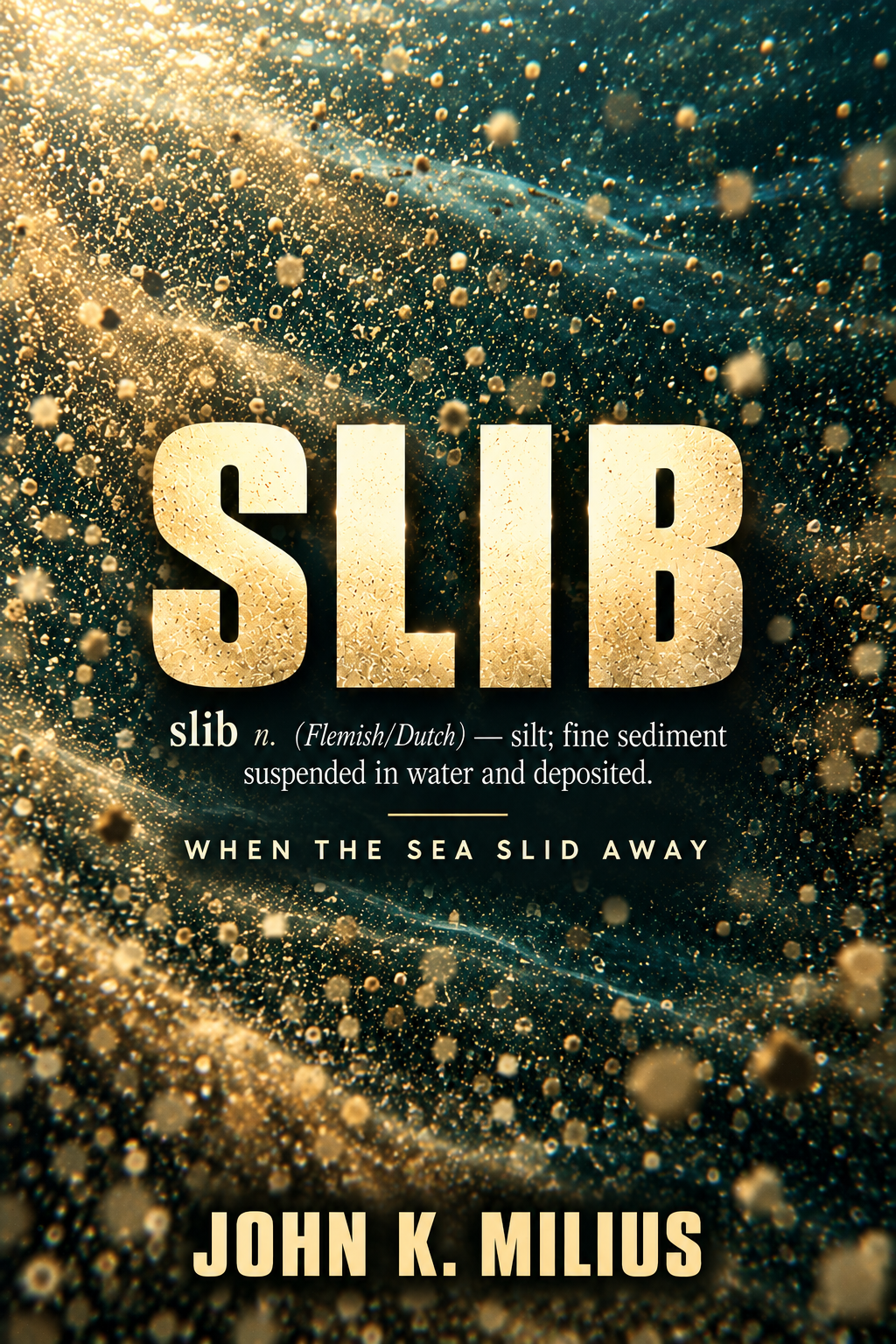
SLIB
About the Book
Before Brugge became a city of canals, stone, towers, and bells, there was water. As the sea withdraws and leaves behind slib—the fine sediment carried by water—generations of families build homes, raise children, trade, struggle, love, and bury their dead upon land their ancestors could not have occupied.
STORY COMPLETE · PUBLICATION 2027
Ask about this bookA Taste of the Writing
Read an Excerpt
A selected passage from the book.
Before the bells, there was the rope.
Pieter van Hove felt it pay out through his hand, wet hemp rasping across the hardened ridge beneath his fingers. The lead went down through black water beside the boat. He did not watch the rope. He watched the marks.
The tide was making toward Damme.
Beyond them, the flat country had not yet separated itself from the dark. A bank showed as a harder line against the sky. Reeds whispered where the current worried their stems. Somewhere behind the boat a man coughed and spat over the side.
Jan Claeys held the tiller with one hand.
“Well?”
Pieter lifted two fingers.
Jan waited.
The lead struck bottom.
Pieter felt it before the rope slackened. A small surrender of weight. Nothing dramatic. No sound. No warning a merchant in Brugge would have heard over breakfast.
He looked at the mark.
“No.”
Jan glanced at him. “Bottom says otherwise.”
Pieter hauled the lead up. The water smelled of salt, weed, wet wood, and the sourness of mud opened to air. Brown-gray paste filled the tallow in the hollow of the lead. Pieter brought it close enough to see grains caught in it.
Pieter wiped the lead with his thumb. The paste yielded beneath the nail, smooth at first and then faintly gritty. He had handled enough bottoms to know the difference between sand that shifted under a current and the finer stuff that seemed almost to cling to the metal.
Slib. A small word for something that could fill a channel without ever making a sound.
Meet the Author
John K. Milius

John K. Milius brings four decades of sales, leadership, customer relationships, and hard-earned commercial judgment to the page. His fiction turns that same eye toward Brugge—a city of water, memory, history, and stories waiting beneath the stones.
Continue Exploring