Fiction
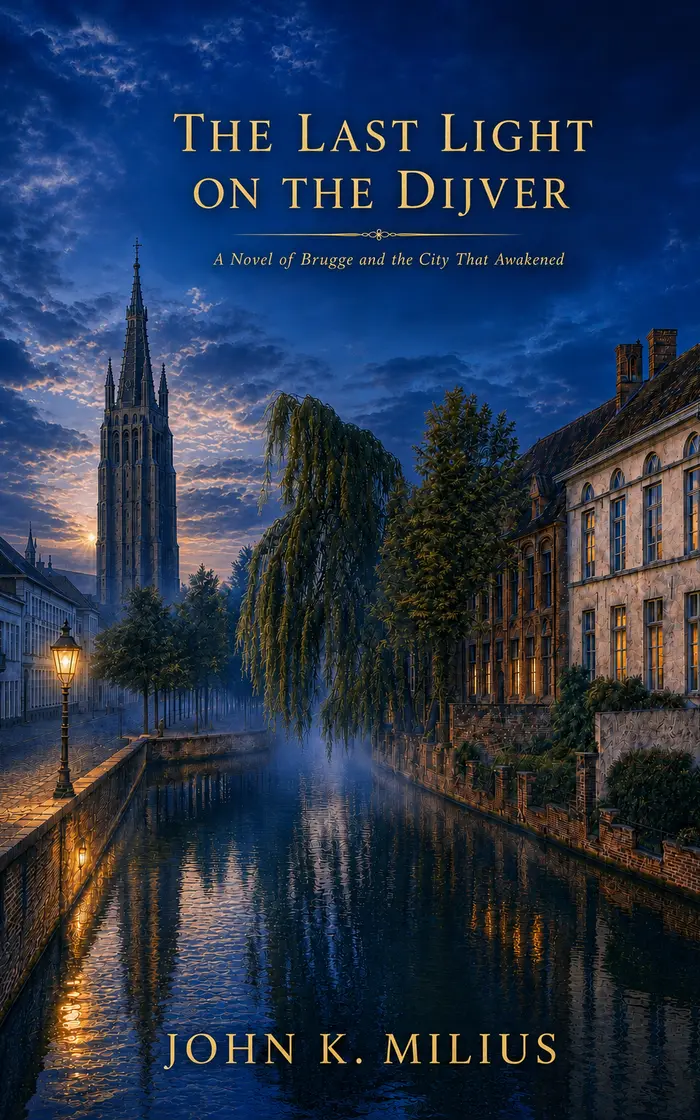
The Last Light on the Dijver
About the Book
At the turn of the twentieth century, Brugge begins to wake after centuries of slumber. As old waterways, buried histories, and new ambitions converge, two strangers are drawn into the life of a city deciding what it will become.
Available now on Amazon
Find on AmazonA Taste of the Writing
Read an Excerpt
A selected passage from the book.
The coal fire was on its final licks.
No flame remained in the iron stove. The last coals had collapsed inward beneath a skin of grey, and even their redness had begun to darken. The room had already surrendered the day: one chair pushed back from the desk, one ink bottle left uncapped, and beside it a half-finished glass of jenever catching the final amber light.
Nothing in the room appeared alive.
Then one coal divided with a small internal click.
Most of it fell harmlessly into ash. One ember did not.
No larger than the eye of a needle, it lifted through the narrowing draft—a bizarre last defiance from a fire that should already have been dead—and escaped through a slender fault in the ironwork.
It descended slowly, dimming as it fell. It passed through the blurred reflection of the jenever glass, below the black shine of the ink bottle, and vanished into the darkness between two warped floorboards.
For several seconds, nothing happened.
Then the dust beneath the floor tightened around it.
A curled shaving of paper lay there, no wider than a thumbnail, where no broom had reached it. One edge had been cut cleanly years before. The other had softened into fur. Its fibers blackened from the center outward, each one taking heat from the one before it. A bead of orange traveled along the torn edge. It found dust. The dust found a ribbon fallen from a bundle of petitions. The ribbon had once been blue.
The flame lifted its head.
Meet the Author
John K. Milius

John K. Milius brings four decades of sales, leadership, customer relationships, and hard-earned commercial judgment to the page. His fiction turns that same eye toward Brugge—a city of water, memory, history, and stories waiting beneath the stones.
Continue Exploring